The All-Party Parliamentary Group (APPG) on Social Media and Young People’s Mental Health and Wellbeing has today (29 June 2018) launched an inquiry to establish what actions must be taken both to tackle the negative impacts of social media use, and to maximise the positives for young people.

The inquiry aims to build on the work of the Royal Society for Public Health (RSPH)’s 2017 report, #StatusOfMind, which found that although social media use has many potential positives for mental wellbeing, such as maintaining friendships and providing a source of emotional support, for young people the impact is primarily negative, fuelling feelings of anxiety, depression, and ‘fear of missing out’.

Polling conducted by RSPH in April 2018 on behalf of the new APPG found that more than half of the UK public (52%) say not enough is being done by social media companies to address the impact of social media on mental health and wellbeing, with two in five (41%) also saying the Government is not doing enough. Four in five (80%) say tighter regulation of social media companies is needed, with almost half (45%) saying this should be done through a self-regulated Code of Conduct, and more than one third (36%) saying it should be legally enforced by Government.

The APPG’s inquiry aims to determine what should be contained in any such Code of Conduct, and how it should be enforced. It will also seek out and recommend other progressive and practical solutions that can help maximise the positives and mitigate the negatives of social media for young people.

The inquiry will be open to receive written and recorded evidence until 13 August 2018, with a number of oral evidence sessions to be held in Parliament in the autumn. The APPG hopes to engage with expert stakeholders including academics, charities, government officials, social media industry representatives, parents and young people themselves, in order to answer four broad questions:

  1. What is the latest evidence of the impact of social media on mental health and wellbeing?
  2. What constitutes a ‘healthy’ and beneficial relationship with social media for young people?
  3. What should be done by government and by the social media industry to address these issues?
  4. What solutions can be provided in terms of technological innovation and education?

Organisations and individuals interested in submitting evidence to the inquiry should download the Call for Evidence from the APPG website at www.rsph.org.uk/socialmediaappg.

This report from the Local Government Association (LGA), produced in partnership with Public Health England, highlights the specific needs and challenges for health and care provision in rural communities. The report includes case studies showcasing the ways in which local authorities in England are tackling health inequalities, improving access to services and building up community resilience.

The 2017 Child Health Profiles, produced by Public Health England (PHE), were released on Tuesday 7 March 2017.

The profiles draw together information to present a picture of the health of children and young people in each local area in a user-friendly format. They provide a snapshot of child .health and wellbeing for each local authority in England using key health indicators which enable comparison locally, regionally and nationally. They are a valuable tool for local government and health services in helping them to understand the needs of their community, so that they can work to improve the health and wellbeing of children and young people and reduce health inequalities.

There is a four-page profile for each local authority in England which includes:

  • An ‘At a glance’ summary description of child health in the area which highlights key findings
  • Maps and charts showing how the health of the area compares to the national view and other local authorities in England
  • A ‘spine chart’ health summary showing the difference in health between the area and the England average for 32 indicators within the five domains of the Public Health Outcomes Framework.

Two new reports to support commissioners in improving the mental health and wellbeing of children and young people.

These reports describe the importance of mental health and wellbeing among children and young people and the case for investment in mental health. They also summarise the evidence of what works to improve mental health among children and young people in order to inform local transformation of services.

We are delighted to share the announcement of the launch of the Child Health Alliance, which brings together key system leaders from children’s health, parents, young people and the voluntary and community sector – and includes iHV executive director, Dr Cheryll Adams CBE.

Child Health Alliance

Child Health Alliance

The Alliance is made possible through funding from the Department of Health and the support of the Royal College of Paediatrics and Child Health and is co-chaired by Dame Christine Lenehan, Director of the Council For Disabled Children and Professor Ian Lewis. The Alliance will look at the current state of health services for children and young people in England, develop priorities, and identify key opportunities for improving children and young people’s health and wellbeing outcomes in England.

Whilst the UK has seen vast improvements to child and adolescent health over the last 30 years, a number of alarming statistics show that, comparatively, the UK is performing poorly on several measures of child health and wellbeing compared with other European countries.

Since the final report of the Children and Young People’s Health Outcomes Forum, there has been an ongoing process of transformation in the health and social care system. There is a pressing concern amongst the child health community that the key messages from the forum have not been taken into account throughout this process, and the voice of children and young people have not been listened to.

We will keep you updated on the work of the Alliance and hope you will support us in our task of ensuring that child health is a priority for government and health system leaders going forward.

Do you work with children in care in England?

If so, would you be interested in taking part in the National Children’s Bureau’s (NCB) research looking at measures of wellbeing for children in care?

The NCB is currently undertaking research on what measures, tools or indicators are used to assess the wellbeing of children in care in England. They’re really interested in finding out more about how such information is collected and used by those working with children in care, which might include foster carers, counsellors or residential home managers.

You can tell them your thoughts and experiences of measuring the wellbeing of children in care by taking part in their ten minute survey: https://www.snapsurveys.com/wh/s.asp?k=146919487933

They are also interested in speaking to managers and practitioners in more detail by telephone. If you would like to volunteer for a short telephone interview, then please contact Rebekah Ryder, Senior Researcher at NCB on [email protected], 020 7833 6811 or submit your details using this form: http://www.ncb.org.uk/measuring-wellbeing-children-care

This research is funded by John Paul Getty Junior Charitable Trust.

The iHV is delighted to share new Good Practice Points and updates to GPPs, providing up-to-date evidence and references for our Associate members:

NEW: GPP – Postnatal Psychosis

These Good Practice Points, authored by Dr Judy Shakespeare, retired GP, Royal College of General
Practitioners Clinical Champion in perinatal mental health, set out what health visitors need to know about Postnatal Psychosis. They provide up-to-date evidence and references.

UPDATED: GPP – Understanding Mothers’ Mental Health & Wellbeing

UPDATED: GPP – Understanding Fathers’ Mental Health & Wellbeing

These Good Practice Points, authored by Sharin Baldwin, Health Visiting Clinical Academic Lead, London North West Healthcare NHS Trust, set out what health visitors need to know about Understanding both Mothers’ & Fathers’ Mental Health & Wellbeing during their transition to parenthood. They provide up-to-date evidence and references.

Updated October 2016.


Please note that these GPPs are available to iHV members only.

If you’re not a member, please join us to get access to all of our resources.

The iHV is a self-funding charity – we can only be successful in our mission to strengthen health visiting practice if the health visiting profession and its supporters join us on our journey. We rely on our membership to develop new resources for our members.

So do join us now!

button small_200

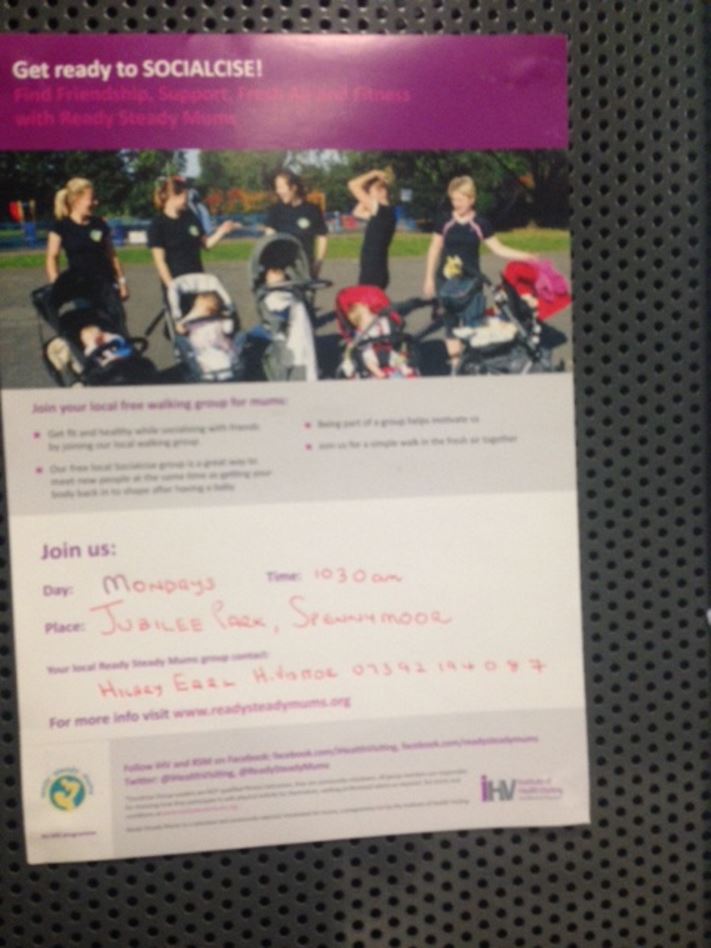
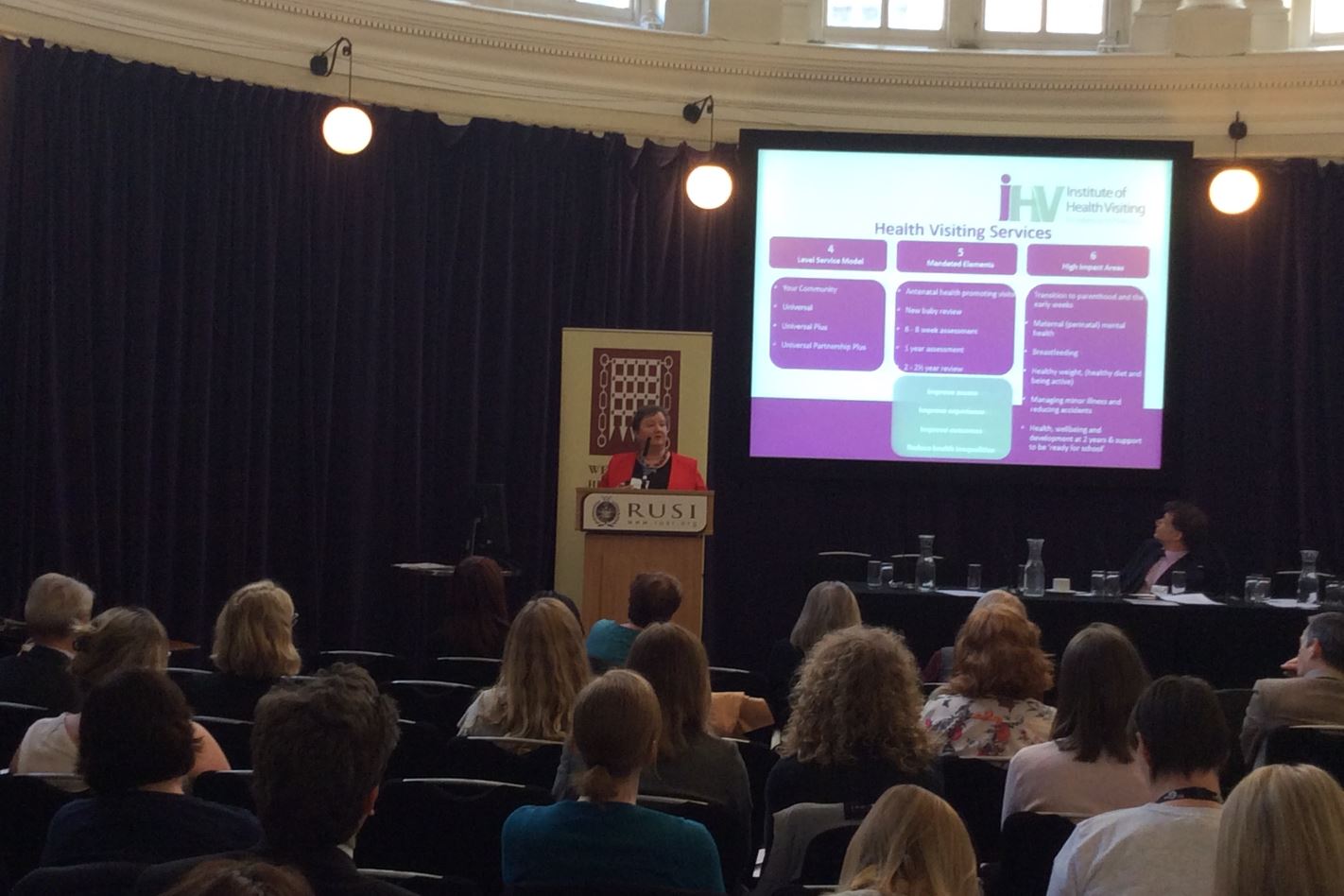
A #wellbeing approach networking event took place in Durham last Friday (30 September), as part of County Durham’s Joint Health and Wellbeing  strategy – where one of our iHV Fellows, Hilary Earl, secured a stand to promote health visiting as well as the iHV and her local Ready Steady Mums group.

img_2304

durham-wellbeing-event-_711x474-img_2307

Gill O’Neill, the interim director of public health in County Durham, made the opening remarks at the event that has been 2 years in the planning .

The event also coincided with the Macmillan fundraising week, which was well supported.

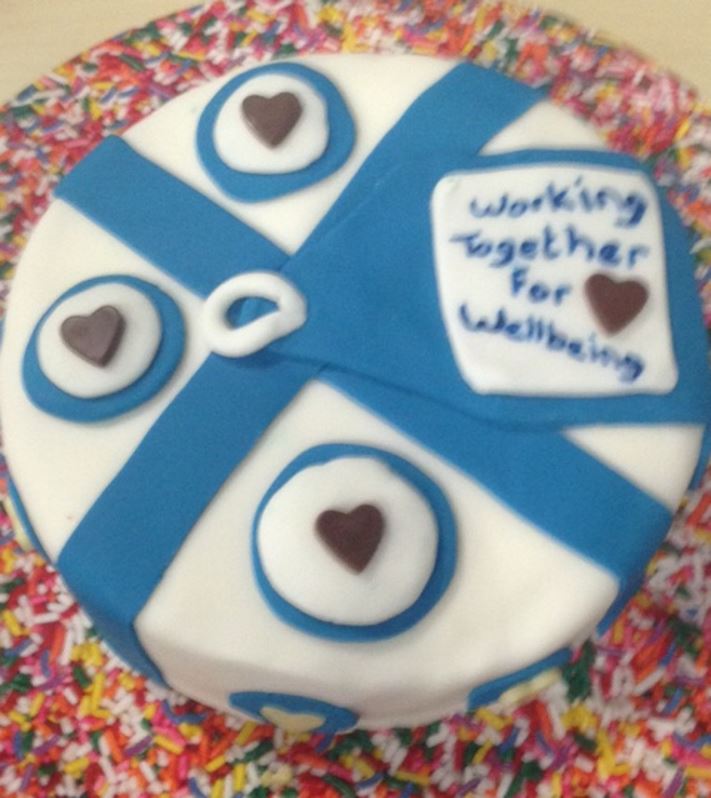
"Working together for Wellbeing" cake at County Durham Health and Wellbeing event

“Working together for Wellbeing” cake at County Durham Health and Wellbeing event

Attendees enjoyed several carousel-style workshops – learning about local health initiatives ranging from Health Trainers and Community Parents to Health Visitors and School nursing services.

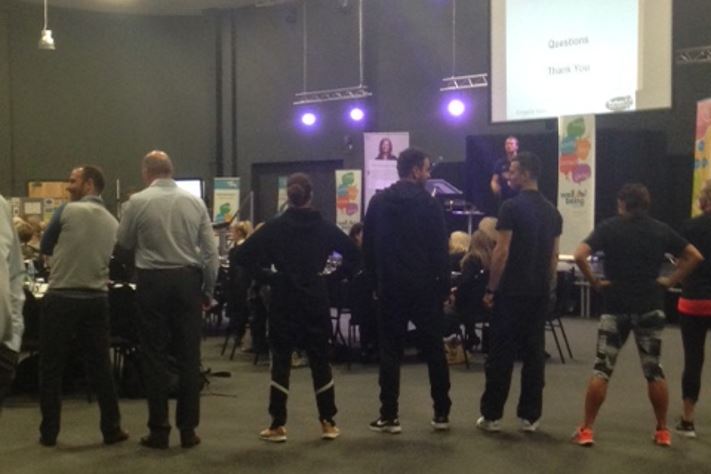
With the focus on wellbeing, there were energising activities throughout the day for the delegates.

durham-wellbeing-event-_711x474img_2303

The iHV stand was well visited and the resources were popular.  Plus Hilary used the opportunity to promote their local Ready Steady Mums group in Spennymoor.

RSM Spennymoor poster at County Durham Health and Wellbeing event

RSM Spennymoor poster at County Durham Health and Wellbeing event

Hilary commented:

It was fabulous networking and a great example of excellent joint working with our commissoners.

Public registration  to observe the committee meeting for community engagement: improving health and wellbeing is now open.

Date: 10:00-16:00 Wednesday 18 May 2016

Location: Manchester

As a public observer, you will be able to listen to the business of the meeting, except where confidential information is being discussed, however, you will not be able to:

  • participate in committee discussions
  • ask questions, take part in voting or put your views to members of the committee

Registration for this meeting will close on Wednesday 4 May 2016. Please note they are not able to accept late requests to observe this meeting.

For further information about meetings in public please refer to the following document: Common questions and answers about standing advisory committee meetings in public.

Should you have any queries regarding observing this meeting, please contact the Meetings in Public Coordinator, Jon Littler – [email protected]