Senior government officials, health leaders, parents and stakeholders from a range of health, social care and support services, gathered at Stormont today to celebrate the launch of Northern Ireland’s new Healthy Child, Healthy Future Framework. The updated Framework provides a comprehensive national policy blueprint, laying out a bold vision for improving child health outcomes across the region.
The refresh of the Healthy Child, Healthy Future (HCHF) Framework has been widely welcomed as an important signal of Northern Ireland’s serious commitment to its babies, children and young people, supporting them to lay the foundations for lifelong health and wellbeing.
Launching the Framework, Mike Nesbitt MLA, Minister for Health, said:
“The framework recognises the evolving challenges faced by our babies, children, young people and families and embraces the principles crucial for reducing inequalities and improving population health outcomes. This must begin in the early years of a person’s life, as the importance of the first 1000 days is well documented in enhancing health outcomes.”
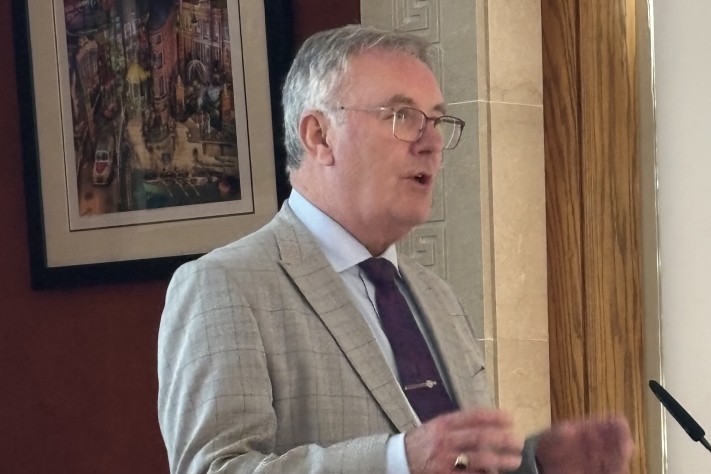
Mike Nesbitt MLA, Minister for Health, launching the Framework
In particular, the Minister set out his government’s ongoing commitment to ensuring that all babies, children, young people and families have access to a robust child health service with highly skilled healthcare professionals (including health visitors).
The Minister stated:
“The roles of midwives, health visitors, family nurses, general practitioners, school nurses and other health and social care professionals are pivotal in building relationships with families.
“Delivering this refreshed framework will require a phased approach and targeted investment, particularly in workforce capacity and training. While some enhancements can be achieved within existing resources, others will require additional support to ensure successful implementation and long-term sustainability… The importance of providing care at the right time, by the right person and in the right place, cannot be overstated and will undoubtedly lead to improved health outcomes, benefiting children and families for many years to come.”
Built on the best global evidence of ‘what works’, the 9 principles of the Child Health Promotion Programme for Northern Ireland are:
- A Whole Child Model with an emphasis on improving outcomes for children and young people through integrated planning of services for children, young people and families.
- Relationship building and continuity of carer.
- A major emphasis on parenting support and positive parenting.
- Recognition of developmental plasticity and neuroplasticity with particular emphasis on the first 1000 days and how life experience during this crucial period can have long-term implications for health, growth and development.
- The inclusion of changing public health priorities.
- An increased focus on vulnerable families, underpinned by a model of proportionate universalism with targeted and enhanced service provision for those babies and children with additional health and or social needs.
- Multi-disciplinary service delivery, ensuring that the correct people have the necessary skills and competencies to deliver the programme.
- The use of new technologies and scientific developments, to engage families in the promotion of health and wellbeing and improve quality outcomes.
- Quality Assurance of programmes to monitor outcomes.
Alison Morton, iHV CEO, attended the launch event and said:
“The launch of the new HCHF Framework is good news for Northern Ireland. The evidence is clear – when babies, children and families thrive, the whole of society benefits. And I think it is excellent for 3 reasons: it puts babies, children, young people and families firmly at its centre, and is ambitious for them all to thrive; it is built on the best global evidence of what works, including the importance of a highly skilled child health workforce; and it’s more than words on a page, it’s backed up with Ministerial support and a pledge to turn it into reality.
“Congratulations to the whole team who have delivered such a significant and robust policy blueprint for child health – it has been both a privilege and great pleasure to have worked with the team in Northern Ireland, as a member of its HCHF Programme Board.”
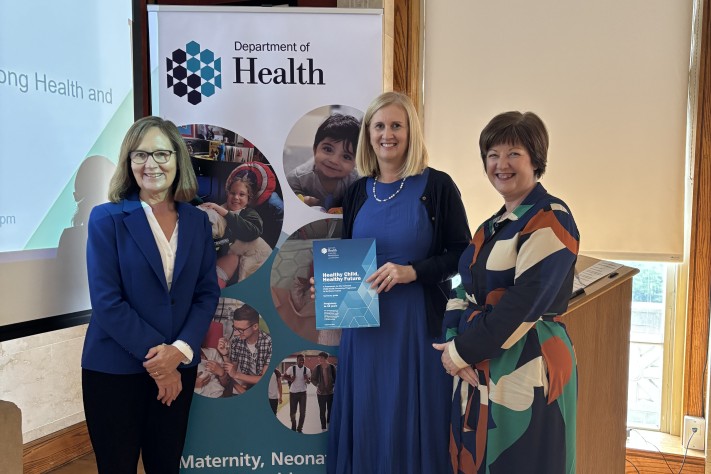
Alison Morton at the Framework launch event, together with Sonia Glendinning (Nursing Officer, Department of Health, Northern Ireland) and Caroline Keown (Chief Midwifery Officer, Department of Health for Northern Ireland)