iHV CEO, Alison Morton, provided evidence on the impact of the pandemic on children, young people and their health services at today’s COVID-19 Inquiry Module 8 Public Hearings.

Alison Morton, iHV CEO, providing evidence on the impact of the pandemic on children, young people and their health services at the COVID-19 Inquiry Module 8 Public Hearings

The UK COVID-19 Inquiry has been set up to examine the UK’s response to and impact of the COVID-19 pandemic, and learn lessons for the future.

Module 8 is examining the impact of the pandemic on children and young people in England, Wales, Scotland and Northern Ireland. It will consider the impact of the pandemic on children across society including those with special educational needs and/or disabilities and from a diverse range of ethnic and socio-economic backgrounds.

Alison, on behalf of the Institute of Health Visiting, was invited to be a core-participant in the Inquiry Module 8 – having previously also submitted evidence to Module 3 – Impact of Covid-19 pandemic on healthcare systems in the 4 nations of the UK (read our news story here).

Alison joined today’s other speakers: Duncan Burton (on behalf of NHS England); Prof. Steve Turner (on behalf of the Royal College of Paediatrics and Child Health); Claire Dorer OBE (on behalf of the National Association of Special Schools); and John Barneby (on behalf of Oasis Community Learning).

Alison’s evidence

In her written submission and oral evidence today, Alison described how the needs of our nation’s babies and children were not given the attention they deserved in the emergency plans – and babies were ignored and largely forgotten. Other areas of healthcare were prioritised and the response failed to adequately consider the breadth of the pandemic’s wider harms.

As a direct consequence, too many children were harmed – yet, these harms were entirely foreseeable and predictable, and impacted child health, development and safety.

The pandemic was a highly stressful time for both families and services, with plans operationalised under huge pressure, lack of staff and multiple competing priorities. Staff came to work to do a good job – but this was very challenging. Like any emergency, lots of decisions were made; some were good, some were wrong from the start, and some were found to be flawed and caused unnecessary harm. And it took too long to reverse bad decisions.

One of the biggest failings for health visiting was the decision to “stop” the service and redeploy health visitors, under the misguided impression that they were needed most to care for acutely ill patients. In reality, health visitors were needed most on their own ‘frontline’, supporting babies, children and families during this stressful time. During the pandemic, health visitors were incredibly resourceful and supported millions of families – but as a result of these decisions, many missed out.

The second notable failing was the decision that contacts should be ‘virtual by default’. This was driven by insufficient PPE, a lack of understanding of the role of health visitors, and the importance of babies, young children and families being seen in person.

Thirdly, when it was clear that large numbers of families were struggling and demand for health visiting support soared, services should have been strengthened. Instead, health visiting experienced further cuts in real terms.

Commenting on the Inquiry, Alison said:

“It is clear that babies, children and families were failed in this pandemic. Their needs were not prioritised. Too many were not given care, support and protection when they needed it most. To put this right, children need more than an apology – because there is a burning platform for us to do better. And there are two urgent priorities:
– Firstly, for the children in this generation, now! who have been harmed, or have needs that aren’t being met. We need a national “Babies, Children and Young People Covid-19 Recovery and Rebuild Plan”. This cannot be ignored any longer – inequalities are not inevitable. And we know enough about what works to make a difference now.
– Secondly, for the babies, children and young people in the future – for the next emergency. We need to be better prepared to cope next time – as things stand now, we look to be worse off.

“It’s clear that the failures were due to systemic failures, in the way that children’s needs – and child health services – are resourced and prioritised in the heart of government. We need to create a better future. And this will take investment and a plan to tackle the root causes of poor health and rebuild child health services. This cannot be put at the bottom of the pile again.”

Recommendations

In her statement, Alison provided a full list of recommendations and set out her ‘top three’:

  1. A cross-government strategy is needed to prioritise the earliest years of life and reduce inequalities. This must include actions to tackle the wider determinants of health and a commitment to world class child health services.
  2. Ensure that the holistic needs of babies, children and young people are explicitly addressed in future emergency plans. And this must include the pandemic’s wider impacts.
  3. Specifically for health visiting:
  • Health visitors are most needed as Specialist Community Public Health Nurses working with families during emergencies. The health visiting service must be categorised to continue and not stop during these worrying times.
  • There is an urgency to rebuild health visiting services in England where services have been decimated, following years of cuts. We urgently need more health visitors because health visitors are a vital child health workforce, providing a frontline service that reaches all families and works with others to ensure they get the support they need to thrive.

And this is needed to help create the healthiest generation of children ever.

Recordings

Watch a clip of Alison at the COVID-19 Inquiry Module 8 Public Hearings:


Alison’s submission for Module 8 builds on her submission for Module 3, with the inclusion of additional evidence and iHV position statements on key issues affecting babies and young children.

See all recordings from the COVID-19 Inquiry proceedings – https://www.youtube.com/@UKCovid-19Inquiry

Exclusive iHV Insights webinar recording is now open access: The Public health role in reducing A&E attendances

To help raise awareness of health visitors’ role in tackling the current crisis in urgent care services, we are delighted to share the recording of our recent iHV Insights webinar: “The Public health role in reducing A&E attendances” held on 16 January 2025.

Tackling increasing demands on urgent services is a national priority as too many patients are waiting too long in overcrowded A&E departments across the country. Our iHV report and film,  published in December 2023, highlighted that babies and young children are the highest users of A&E, with the rate of children aged 0-4 years attending A&E in England increasing by 42% in the last 10 years. When reviewed, a large proportion of these attendances did not require hospital treatment and were for non-urgent conditions (for example, minor illnesses, feeding problems, and parental distress due to infant crying), suggesting that they could be managed and supported by other means, including health visitors in the community.

Following the Darzi review, the new government has proposed three “shifts” in health care to ensure that services are fit for the future – this includes shifting care from the hospital to the community and a much greater emphasis on prevention. Health visitors can play an important part of the solution to addressing increasing demands on urgent care services through their ‘upstream’ work in prevention and early intervention – supporting parents to manage minor illnesses by improving health literacy is a central function of health visiting.

This webinar brought together a leading panel of expert speakers who explored the health visitors’ public health role in reducing A&E attendances alongside the latest national data and context of 0–4-year-olds attending A&E:

  • Honorary Professor Damian Roland, Consultant in Paediatric Emergency Medicine, Leicester, Leicestershire & Rutland Urgent and Emergency Care System Clinical Director
  • Georgina Mayes, iHV Health Visiting Professional Lead (Quality and Policy)
  • Kate Walters, Divisional Director of Nursing & AHPs, Children & Family Services and CAMHS

This webinar brings into sharp focus the unique needs of babies, young children and their families and the importance of ensuring that they can access the right healthcare support when they need it – right person, right place, right time.

Help us raise awareness and drive meaningful change to improve healthcare support for families. Please share the webinar and short iHV film “Can you see my baby? Health visitors prevent emergencies” on the vital role of health visitors in reducing A&E attendances for babies and children aged 0-4 years with your commissioners, local MPs and Health Boards.

Honorary Professor Damian Roland said:

“Emergency Department attendances reflect inequalities in society and the systems response to them. Understanding, and addressing, underlying reasons for Emergency Department attendances will ultimately improve the long-term life chances of Children and Young People.”

Georgina Mayes, iHV Health Visiting Professional Lead (Quality and Policy), said:

“Health visiting is an important part of the solution to reducing A&E attendances. This webinar highlights the vital role of health visitors in providing expert, professional support to families when their baby or child is unwell. More health visitors are urgently needed now to ensure all families can get the support that they need, which will in turn take pressure off overstretched A&E departments.”

Kate Walters, Divisional Director of Nursing & AHPs, Children & Family Services and CAMHS, said:

“Parental confidence and the importance of understanding your baby is crucial to the decisions that parents and carers make about accessing health care – where to go, what to do and what is the most appropriate. Health visitors play a key role in building this understanding and helping parents to navigate the health system. Health visitors can provide signposting, advice, digital support, and are accessible to all.”

Watch the full iHV Insights recording:


Watch short iHV Film, “Can you see my baby? Health visitors prevent emergencies

Join the conversation and share your thoughts on how we can work together to support babies, young children, their families and communities more effectively #HealthVisiting #ReduceA&EAttendances #Prevention.

This webinar is part of a series of iHV Insights events produced for iHV members to support their continuous professional development and help them keep abreast of the latest issues in child and family public health. Not a member? Consider joining us. Our corporate membership provides exclusive access to expert-led events, resources, and networking opportunities designed to support health visitors’ professional development and practice. Individual UK membership is also available in four different categories: Associate, Student, Friend, and Retired

During #BreastfeedingCelebrationWeek, the first European report on infant and young child feeding policies and practices was launched yesterday. It compares 18 countries and identifies the considerable improvements they need to make in supporting mothers who want to breastfeed.

The COVID-19 pandemic has shown how important it is for countries to protect their citizens from illness. Babies who are breastfed have better health and resistance to infection, and most mothers want to breastfeed. Yet many European mothers stop or reduce breastfeeding in the early weeks and months, and bottle feeding is prevalent, due to inadequate support from health systems and society.
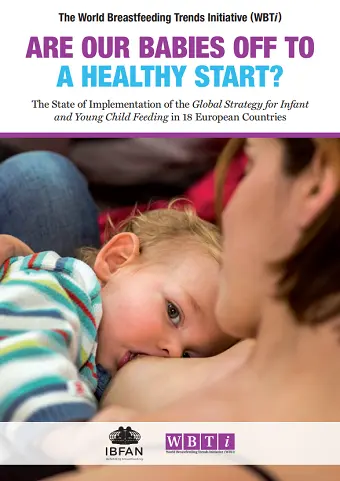
This new report, Are our babies off to a healthy start?, compares the  implementation of WHO’s Global Strategy for Infant and Young Child Feeding by 18 European countries. The comparisons show clearly that inadequate support and protection for breastfeeding mothers is a Europe-wide problem. The health of babies, mothers and whole populations  loses out as a result. However, countries do differ considerably. Turkey rates highest overall; the five countries with the lowest scores belong to the European Union.

The scope of the assessment is wide-ranging, with ten policy and programme indicators, including national leadership, hospital and community practices, marketing controls on breastmilk substitutes, health professional training, emergency preparedness and monitoring. There are also five feeding practices indicators, such as exclusive breastfeeding for 6 months, a WHO recommendation.

The indicators with the poorest overall scores are national leadership and, shockingly, emergency preparedness, where the UK scored 0/10.