
21st August 2026
We are delighted to share this Voices blog with the latest trusted advice from First Steps Nutrition Trust (FSNT) – highlighting their newly published ‘Frequently asked questions’ (FAQ) about switching infant formula and the safest way to do it, plus their New: ‘Bite-Sized’ Healthy Start & Best Start Foods Resources.

Is it okay to switch infant formula and what is the safest way to do it? New FAQ
Parents using formula to feed their babies often ask whether it is safe to switch infant formula brands, particularly when costs rise or products become difficult to find. To support healthcare professionals in providing clear and practical advice in response to this query, we have published a new FAQ:”Is it okay to switch infant formula and what is the safest way to do it?”
The FAQ is intended for healthcare professionals who support parents and carers using infant formula. It explains how parents can safely change between different first infant formula products (marketed as “first infant milk” with a number “1” on the label) when there is no clinical reason requiring a specialised formula. It emphasises that all first infant formulas sold in the UK must meet strict compositional regulations and are therefore nutritionally comparable, with no evidence that one brand of first infant formula is superior to another. Parents can be reassured that lower-cost first infant formulas are just as good as more expensive products because all first infant formula products have to meet the same strict nutritional requirements by law.
When might parents want to switch formula?
While there is rarely a nutritional reason to change between first infant formulas, parents may choose to switch products because of:
- Cost considerations
- Product availability
- Brand preference
- Changes in where they shop or obtain formula supplies.
The FAQ provides clarification that specialised formulas, such as hypoallergenic, anti-reflux, lactose-free or high-energy formulas, should only be used under appropriate healthcare supervision.
Practical advice for parents
There is no single “right” way to change formula products. Changing directly to a new first infant formula (i.e. replacing all feeds with a new product) is perfectly safe for most infants. This may be necessary, for example, if the infant’s usual formula is unavailable and an alternative brand or product must be used. However, formulas can differ slightly in taste and flavour, and some infants may need time to become familiar with a new product. In these situations, a gradual transition may help support acceptance.
The approaches parents may want to consider:
- Changing all at once
Replacing all feeds with the new formula. This is a safe option for most infants. - Changing gradually
Introducing the new formula over time to help the infant become accustomed to it. Healthcare professionals can discuss a range of approaches with parents, including:
A. Replacing one feed at a time
Parents can gradually increase the number of feeds made with the new formula over several days. For example, they might start by replacing one feed per day before increasing the number of feeds until the infant is fully switched to the new product.
B. Gradually increasing the proportion of new formula at each feed
Parents may prefer to increase the proportion of new formula while decreasing the proportion of the usual formula at each feed. The FAQ includes an illustrated 4-day example, which demonstrates proportions only and can be adapted to suit the infant’s response and usual feed volume. There is also a worked example to help outline this approach.
Importantly, the transition schedules are intended as a guide rather than a prescriptive plan. Some infants may comfortably tolerate faster changes, while others may benefit from a slower approach. Parents can remain on the same ratio for several days before progressing if their infant needs more time to adapt. Some parents may need additional support from a healthcare professional to develop a plan tailored to their infant’s usual feed volumes and individual needs.
What should parents expect?
The FAQ outlines mild and temporary changes that can occur during a formula change, including:
- Changes in stool colour or consistency
- Increased gas
- Mild fussiness
- Short-term reluctance to feed due to differences in taste.
These changes are usually temporary and improve within a few days as the infant adjusts to the new formula. The resource also outlines signs that may require further assessment, such as persistent vomiting or diarrhoea, blood in the stool, rash, breathing symptoms, poor feeding or faltering growth.
Summary of key points for parents
Healthcare professionals may wish to emphasise:
- Changing between infant formulas (first infant milks, labelled with a 1) is safe
- All first infant formulas must meet strict compositional regulations and are therefore nutritionally comparable
- Lower‑cost formulas are nutritionally equivalent to more expensive brands/products
- There is no requirement to change products or brands in most cases
- Changing directly to a new first infant formula (i.e. replacing all feeds with a new product) is perfectly safe for most infants
- Changing gradually may help the infant accept the new formula, but is not essential
- Mild gastrointestinal symptoms are common and usually temporary
- Medical advice should be sought if symptoms are severe or persistent.

Related resources
Healthcare professionals may also find the following resources useful:
- Infant milks: A simple guide to infant formula, follow-on formula and other infant milks
- Information for parents and carers on infant feeding and formula milks
- Specialised milks reports, including information on hypoallergenic, anti-reflux and other specialist products
- Infographics and guidance on the safe preparation of infant formula
New: ‘Bite-Sized’ Healthy Start & Best Start Foods Resources
We know that busy parents and professionals often need quick, practical information that’s easy to find and use. That’s why FSNT has developed a series of bite-sized, standalone resources, bringing together key messages from our Healthy Start Best Start Guide in an accessible and user-friendly format.
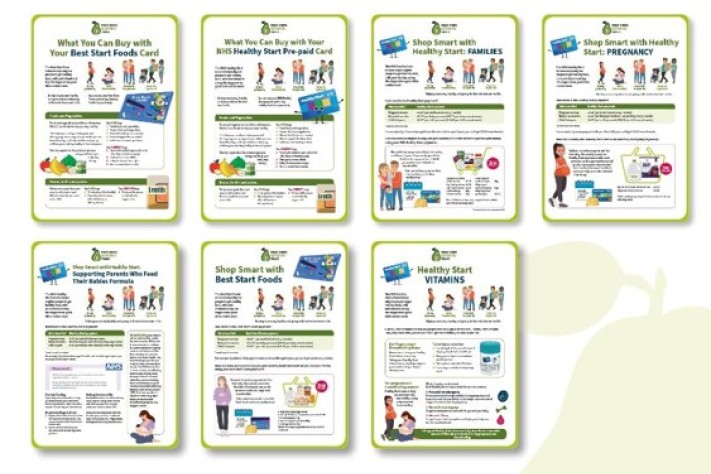
These resources have been designed to provide clear, visual information on topics including what Healthy Start and Best Start Foods payments can be used for, practical shopping ideas, and what Healthy Start Vitamins are, including how and why to use them.
We were particularly keen to highlight the important role that the Healthy Start and Best Start Foods schemes can play in supporting maternal nutrition during pregnancy and after birth. Messages about using these benefits to support mothers’ own diets, including while breastfeeding, are often overlooked. Our new resources place greater emphasis on how the schemes can support both mother and baby through pregnancy, the postnatal period, and beyond.
The new resource collection includes:
- Resource 1: What You Can Buy with Your Best Start Foods Card (Scotland) A simple visual guide showing what can be purchased using a Best Start Foods card.
- Resource 2: What You Can Buy with Your NHS Healthy Start Pre-paid Card (England, Wales and Northern Ireland) A simple visual guide showing what can be purchased using the NHS Healthy Start Pre-paid Card.
- Resource 3: Shop Smart with Healthy Start – Families Practical shopping list examples and ideas to help families make the most of their Healthy Start payments.
- Resource 4: Shop Smart with Healthy Start – Pregnancy Shopping list examples focused on supporting nutrition during pregnancy.
- Resource 5: Shop Smart with Healthy Start – Formula Feeding Information for parents who feed their baby formula, including shopping list examples.
- Resource 6: Shop Smart with Best Start Foods Scotland-specific shopping list examples showing how families can maximise their Best Start Foods payments.
- Resource 7: Healthy Start Vitamins: Information on Healthy Start vitamins, who can access them, and why they are important.
We hope these resources will help make Healthy Start and Best Start Foods information easier to understand, share and put into practice, supporting families to get the maximum benefit from the schemes and helping professionals have more informed conversations with the parents they support.
You can print them in black and white or colour and use them as posters or hand-outs.


