17th April 2026
We are delighted to share this iHV Voices Blog by Ruth Haas Eckersley, Specialist Health Visitor SEND, Screening link Coordinator and iHV Fellowship Scholar, Northern Care Alliance. Ruth shares her journey with genomics and how becoming an iHV Genomics Ambassador, with its health-visiting‑focused introduction, made genomics feel relevant and accessible rather than overwhelming. Genomics is transforming healthcare, now and in the future, and Ruth strongly encourages all health visitors to engage in this important topic.
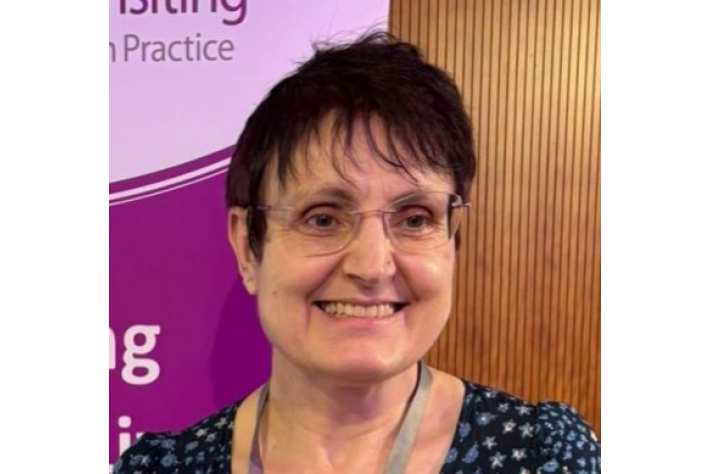
Ruth Haas Eckersley, Specialist Health Visitor SEND, Screening link Coordinator and iHV Fellowship Scholar, Northern Care Alliance
I am a Specialist Health Visitor with a focus on Special Educational Needs and Disability (SEND) and screening, working closely with babies, young children and families, often at the earliest stages of health concern or emerging need.
My own journey with genomics did not begin with a clear plan. Much like my ongoing interest in research, it started with curiosity and a desire to better understand the questions arising through my practice. In practice, I work with families whose children have complex and unexplained developmental needs, often at the very start of a long diagnostic journey. I began to notice that genomics was becoming part of these conversations – even if I did not yet feel confident using genomic language or knowledge explicitly.
Genomics is increasingly significant for health visiting practice – now embedded in the NMC Standards of Proficiency for Specialist Community Public Health Nurses (SCPHN)1, which recognise genomics as part of everyday practice and emphasise the responsibility of health visitors to develop genomic competence. This professional expectation is further reinforced by national policy, including the NHS Fit for the Future 10-Year Health Plan², which highlights the role of genomics in earlier diagnosis, prevention, and personalised care across the life course.
As a universal preventative public health service, health visiting is uniquely placed to support families to understand complex genomic information, navigate pathways, and access emerging genomic services equitably – often involving discussions about uncertainty, referrals to specialist services, and, where appropriate, genomic testing.
Becoming an iHV Genomics Ambassador two years ago was a turning point. At that stage, genomics still felt like a specialist subject, and I was aware of gaps in my knowledge and confidence. The Ambassador training offered a health-visiting‑focused introduction, making genomics feel relevant and accessible rather than overwhelming. It helped me recognise that genomics was not something entirely new to add to my role, but something already present within many aspects of health visiting practice.
As an iHV Genomics Ambassador, I was then able to deliver awareness sessions for colleagues within my service, to raise local awareness of genomics. These sessions often prompted recognition of key genomics touchpoints; for example, many colleagues could see genomics reflected in familiar activities such as newborn screening, conversations about family history (including drawing family genograms or pedigrees), observing developmental patterns, and supporting families when things do not follow the expected trajectory. This reinforced a key realisation for me: health visitors are already engaging with genomics – we may just not always recognise it or feel confident naming it.
This realisation also led to a shift in how I viewed my own practice. In my specialist health visitor role, I regularly work with families whose children are undergoing or awaiting genetic investigations, often at the start of what can become a long diagnostic odyssey. In these moments, health visiting skills matter – listening, building trust, explaining complex information in accessible ways, and advocating for families are particularly important. Genomics is not only about testing to obtain a diagnosis; it is about how families experience care and are supported during some of the most challenging points in their journey.
Building on my practice, and as part of iHV‑led-awareness‑raising around the Generation Study, I contributed to a steering group exploring how health visiting fits within emerging pathways. A key focus was ensuring that these pathways reflected the realities of community practice and the ongoing support that families need, rather than viewing genomics as a single moment or event.
To deepen my understanding, I took the opportunity to complete a fully funded Master’s‑level module in Genomic and Counselling Skills for Nurses and Healthcare Professionals. Learning alongside a multidisciplinary group of professionals – including pharmacists, specialist nurses, and midwives – helped to broaden my perspective on how genomics is applied across different areas of care. Rather than introducing something entirely new, this learning helped me to join the dots between what I was already seeing in practice and the wider genomic landscape. The emphasis on communication and counselling skills was particularly valuable, reinforcing that confidence in genomics comes as much from how we talk with families as from technical knowledge.
My journey into genomics has felt especially timely. Genomics is now a central feature of the NHS 10-Year Health Plan1, reinforcing a stronger emphasis on prevention within healthcare and recognising the key role of nurses, midwives, and health visitors within the genomic landscape, as set out in the Nursing and Midwifery Genomics Framework for England³. Against this backdrop, my own engagement in this area has felt well aligned with the future direction of health visiting, rather than something separate or additional. As a next step, I have applied to join the first national Community of Practice in genomics for health visiting in England. This feels like a natural progression from my learning so far and reflects my belief that genomics is best embedded through shared learning, collaboration and peer support.
Genomics is transforming healthcare, now and in the future. I strongly encourage all health visitors to engage in this important topic. If you’re interested in becoming an iHV Genomics Ambassador, details of this fantastic programme, including upcoming dates to attend, and further resources can be found via the links below.
Ruth Haas Eckersley, Specialist Health Visitor SEND, Screening link Coordinator and iHV Fellowship Scholar, Northern Care Alliance
Further Resources


References
- Nursing and Midwifery Council (NMC). standards-of-proficiency-for-scphn-print-friendly.pdf. London: NMC; 2022 [accessed 5 Apr 2026].
- Department of Health and Social Care. Fit for the future: 10‑year health plan for England. London: DHSC; 2025 Jul 3 [accessed 5 Apr 2026]. Available from: https://www.gov.uk/government/publications/10-year-health-plan-for-england-fit-for-the-future
- NHS England. Nursing and midwifery genomics framework in England. London: NHS England; 2025 [accessed 13 Apr 2026]. Available from: https://www.england.nhs.uk/long-read/nursing-and-midwifery-genomics-framework-in-england/


