15th June 2026
We were delighted to join Sandra Igwe MBE, founder of The Motherhood Group, for a podcast to mark the organisation’s 10th anniversary – in conversation with Amanda Holland, iHV Education, Learning and Development Lead. Sandra’s powerful reflections on a decade of impact from her and her team were both moving and inspiring, highlighting the importance and reach of their work.
The Motherhood Group is a UK-based social enterprise dedicated to improving the Black maternal experience and tackling inequalities in maternal health. Through community-led support, events, peer networks, national campaigns, and training for professionals, the organisation works to ensure Black mothers receive culturally competent care, feel heard, and have access to the right support throughout their maternal journey.
The iHV has benefitted enormously from its partnership work with The Motherhood Group over many years, strengthening both organisations’ shared ambition to improve the care and support of Black mothers. Look out for the upcoming launch of our Promoting Care Across Cultures training programme, developed in partnership with The Motherhood Group – coming soon.
Sandra’s passion, authenticity, and unwavering commitment shine through in everything she does. Amanda found it an honour to spend time learning from her leadership and reflecting on the powerful impact that The Motherhood Group continues to make.
Read Sandra’s blog below and listen to the podcast here.

Sandra Igwe MBE, Founder and Chief Executive, The Motherhood Group
Ten Years of The Motherhood Group: What I know now about Black maternal health
I never planned to build a national organisation. In 2016, I was a new mother navigating postnatal depression, isolation and a system that didn’t always make me feel seen. So I did what felt natural: I created a small WhatsApp group for Black mothers who felt the same way. Ten years later, The Motherhood Group supports more than 18,000 Black mothers across the UK, and the conversation we started has reached parliament, hospitals, research institutions and living rooms across the country. As we mark this milestone, I want to reflect honestly on the journey, what has changed, what hasn’t, and what I believe every health visitor and healthcare practitioner needs to understand.
Why did you start The Motherhood Group?
Honestly? Because I needed it and it didn’t exist. My early experience of motherhood was marked by trauma during pregnancy and in the postpartum period with 3 of my children. I have written about this openly in my book, My Black Motherhood: Mental Health, Racism, Stigma and the System, because I believed then, as I do now, that sharing lived experience has power. At the time, there were very few spaces where Black mothers could speak freely, be believed and be supported by people who understood their cultural context. That gap was the beginning.
What were the biggest problems you were trying to solve?
Isolation. That was the word I heard most from Black mothers. Not just physical isolation, but the feeling of being unseen in clinical settings, underrepresented in research, and unheard when raising concerns. We know from the data that Black women are significantly more likely to experience poor maternal outcomes in the UK, and yet their voices were rarely centred in the conversations about why. We wanted to change that by making community, advocacy and lived experience inseparable from each other.
Our flagship Black Maternal Mental Health Week was born from that mission, creating a dedicated national moment each year to elevate Black mothers’ mental health, reduce stigma and connect women to support and resources.
What moments have defined the journey?
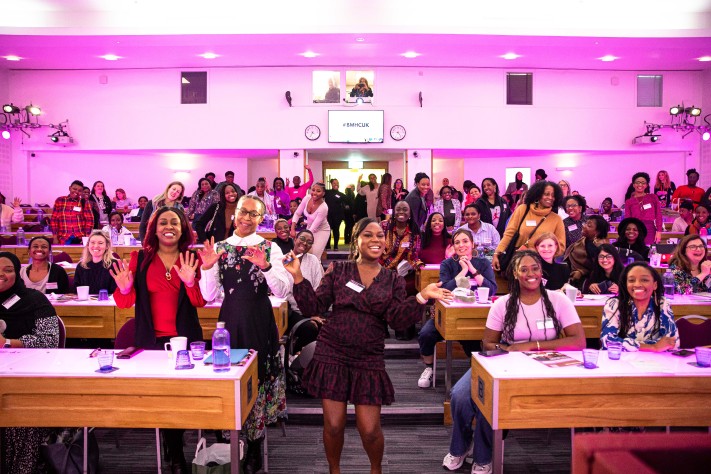
There have been so many. Giving evidence to the Government’s Maternity Disparities Taskforce. Selling out our annual Black Maternal Health Conference, which now draws hundreds of delegates including midwives, health visitors, commissioners and policy makers. Producing our film Make Black Mothers Visible, which has been used as a training resource by NHS organisations and universities. And receiving my MBE, which I see not as a personal honour but as recognition of the collective work of every Black mother who shared her story with us.
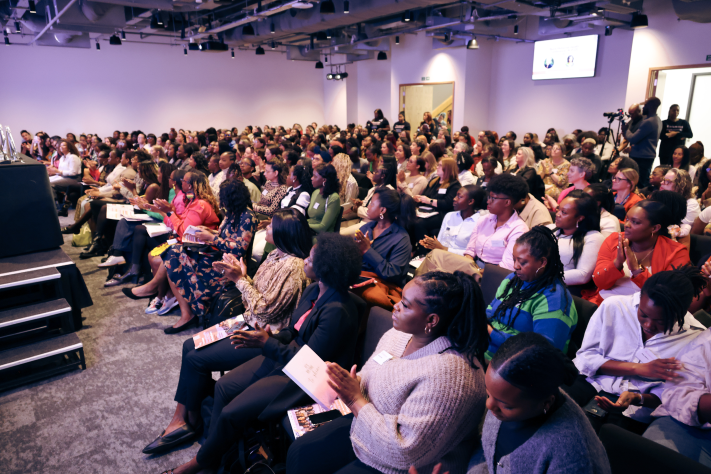
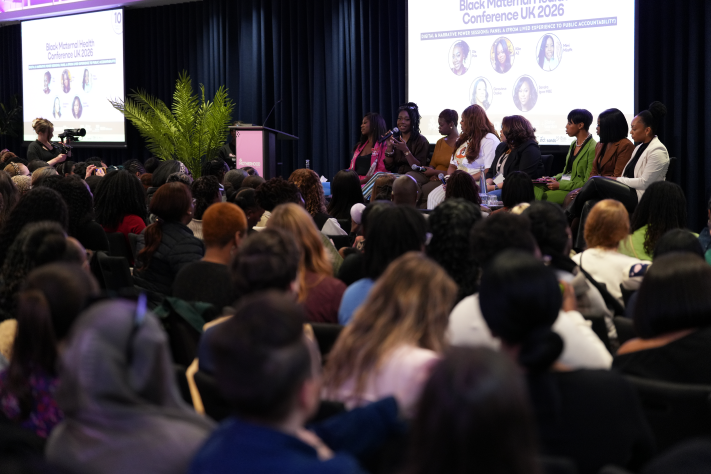
But the defining moments are often quieter than that. A mother messages to say she finally asked for help after attending one of our events. A health visitor tells me a training session changed the way she listens. Those are the moments that stay with me.
What have been the toughest challenges?
Sustainability. The need has always been greater than available resource. We have operated in a space where advocating for racial equity in maternity care is still, in some settings, considered controversial rather than essential. We have had to be persistent, evidence-led and community-rooted all at once.
There is also the emotional cost of doing this work. When you build an organisation from lived experience, you carry the weight of every story that is shared with you. That is a privilege, but it is also a responsibility that requires care.
How do you measure impact?
We look at numbers: 18,000 mothers supported, NHS Trusts and ICS partners worked with, conference delegates trained. We also look at systems. Has the organisation influenced policy? Has it contributed to better workforce practice? Our digital platform Mumbrite is extending that reach, connecting mothers to support, information and community wherever they are. But the most meaningful measure will always be whether Black mothers feel better supported, more informed and less alone.
We also deliver workforce training for healthcare practitioners, helping teams develop the cultural competence, reflective practice and practical tools needed to provide more equitable care. This feels especially important as we know that the quality of the relationship between a practitioner and a Black mother can be life-changing.
What is next for The Motherhood Group?
The next chapter is about scale and depth in equal measure. We are growing our international footprint across the UAE, Nigeria, Kenya and Ghana, while continuing to invest in our UK programmes and partnerships. We are developing new research, expanding Mumbrite, and delivering our most ambitious Black Maternal Mental Health Week yet this September.
But scaling impact has to go hand in hand with staying community-led. The moment we lose that rootedness, we lose the thing that makes this work matter.
What would you say to health visitors and healthcare practitioners reading this?
Listen. Believe. Partner. Those 3 words are simple, but they are transformative in practice.
Cultural competence is not about knowing everything about someone’s background. It is about being curious, reflective and willing to understand each individual’s experience without assumption. Small acts, taking a little more time, acknowledging concerns, involving women meaningfully in decisions, can make a significant difference to whether a Black mother feels safe in your care.
When Black women feel heard and respected, trust grows. And trust is one of the most powerful foundations for positive maternal outcomes. That is not just an aspiration; it is something every practitioner has the capacity to build, regardless of their role or setting.
Ten years in, I am more convinced than ever that this work is urgent and that change is possible. I am grateful to every partner, every practitioner and every mother who has been part of this journey with us. Here is to the next ten years.
Follow The Motherhood Group: @themotherhoodgroup | @sandeeigwe | #BlackMaternalHealth #BlackMaternalMentalHealthWeek #BMMHW26
Sandra Igwe MBE, Founder and Chief Executive, The Motherhood Group
Coming soon from iHV
Our Promoting Care Across Cultures training programme launches this autumn, supporting participants to become iHV Ambassadors and place-based leaders in this area – building understanding of perinatal experiences, promoting trauma-informed, personalised care, and developing skills to influence services and champion culturally sensitive practice. Bookings open soon – watch this space.


