
19th January 2026
Safeguarding supervision should provide a structured discussion between supervisee and supervisor to support and advise on specific complexities and challenges within their caseloads. For safeguarding supervision to enhance safeguarding practice, accountability and responsibility is targeted to the organisation, the supervisor, and the supervisee – with the aim to develop competent, confident, professionally curious practitioners who work across all relevant agencies to support the best interests of a baby/child/young person/individual and their families.
This education, learning and development programme will enable participants to become Safeguarding Supervision Champions to promote the purpose of authentic safeguarding supervision, and for them to become place-based leaders in raising awareness of its relevance with peers/colleagues as well as within their organisations.
Dr Michelle Moseley, iHV Director of Programmes, who developed our exciting new Safeguarding Supervision Champions Programme, said:
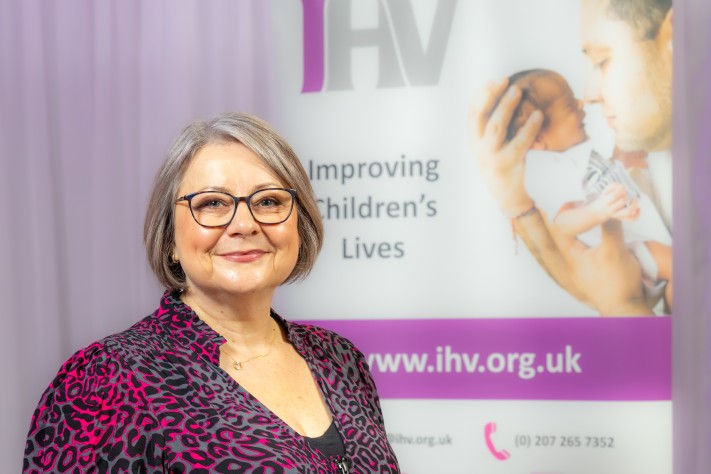
Dr Michelle Moseley, iHV Director of Programmes
“Drawing on my experience as a lead nurse in safeguarding children and as an SCPHN (Health Visitor) Educator, I have seen first‑hand the emotional and professional pressures faced by health visitors and practitioners working with babies, children and families. Safeguarding supervision plays a vital role in supporting those at the frontline, particularly in an increasingly complex and demanding working environment. It provides a protected and trusted space where practitioners can slow down, reflect, and make sense of difficult and often distressing situations.
“This education programme was developed from my own professional experiences, alongside a pilot study and my doctoral research, which took an ethnographic approach to capturing the everyday realities of health visiting practice. My PhD explored how effective safeguarding supervision offers consistent emotional and professional support for practitioners managing high‑risk and sensitive work. The research findings revealed a clear need for improved training for supervisors and for safeguarding supervision to be prioritised across organisations. Strengthening this support helps ensure health visitors feel valued, confident and equipped in their role to protect children and support families.”
Marcia Smikle, Queen’s Nurse, Head of Safeguarding Children at Homerton Healthcare NHS Foundation Trust and iHV Expert Adviser: Safeguarding, said:

Marcia Smikle
“The Institute of Health Visiting is strengthening safeguarding supervision for health visitors through its Safeguarding Supervision Champions programme. This is in recognition of the key public health role and responsibilities that health visitors have in the early identification of need and support they provide to vulnerable children and families. The current workload demands placed on health visitors should not be underestimated. High-quality supervision is essential and provides the opportunity for reflection on self and practice – ensuring that health visitors can make confident, well-informed safeguarding decisions.”
The wellbeing of health visitors dealing with the complexities of safeguarding practice is paramount to prevent feelings of being overwhelmed and carrying the burden of the safeguarding of families outside of the working day. It is important that safeguarding supervisors have the necessary training to equip their supervision practice.
Our champions model of training will allow the Safeguarding Supervisors to share best practice, evidence, research, and have a safe space to discuss their own practice experiences. Therefore, as part of this new education programme, we are delighted to set up a Safeguarding Supervision Champions Forum to meet bi-annually.
Liz Plastow, Safeguarding Consultant and iHV Fellow, commented:

Liz Plastow
“Are you passionate about protecting babies and children from harm and suffering?If so, this training is for you!
“It will equip you to champion safeguarding supervision in your workplace. Providing you with a range of evidence-based skills, models and strategies to strengthen safeguarding supervision, which in turn will support your colleagues to protect those in their care. You will get the opportunity to learn from others and to cascade that learning throughout your profession.
“Do feel free to contact Dr Michelle Moseley for more details. We look forward to you joining us!“

Or contact [email protected] to find out more.


