
1st July 2026
Parliamentarians, safeguarding leaders and early years professionals gathered at a recent NSPCC parliamentary roundtable to discuss the future of safeguarding within Family Hubs and the critical role of workforce capacity in delivering effective support to families.
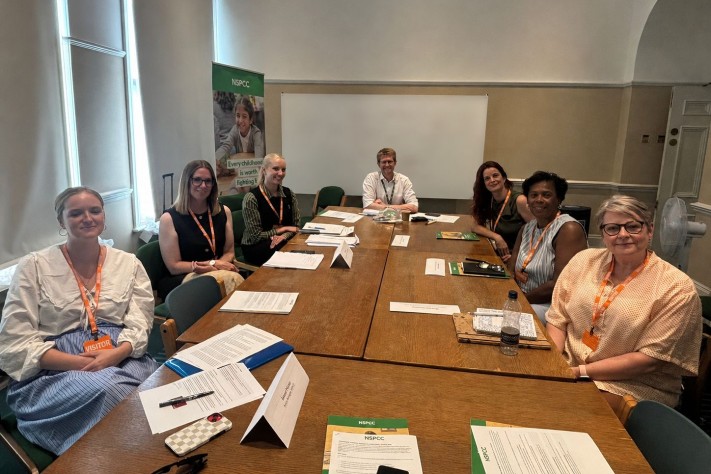
NSPCC Parliamentary roundtable
The event, chaired by Tom Collins MP for Worcester, brought together representatives from across the early years, safeguarding and family support sectors. Attendees included the Institute of Health Visiting (iHV), NSPCC, British Association of Social Workers (BASW), Local Government Association, National Centre for Family Hubs, Royal College of Midwives, Wigan Council, Blackpool Better Start programme, A Strong Start, and other sector leaders. Jess Phillips MP, Parliamentary Under-Secretary for Safeguarding and Violence Against Women and Girls, also participated in the discussion.
Representing the Institute of Health Visiting, Dr Michelle Moseley contributed the health visiting perspective to discussions focused on strengthening safeguarding arrangements through Family Hubs.
The roundtable followed the publication of the NSPCC’s report, It Takes a Place: Multi-Agency Safeguarding in Family Hubs, released in May 2026. The report draws on interviews and focus groups with Family Hub practitioners across England, an analysis of 15 serious case reviews involving children under five between 2018 and 2025, a rapid evidence review of place-based safeguarding approaches, and polling of 2,084 parents with children aged 0–5.
The report outlines five recommendations for government action, with roundtable discussions focusing particularly on three recommendations most relevant to practitioners and professional bodies:
- Strengthening the link between Children’s Social Care and Family Hubs
- Establishing a shared safeguarding approach across services
- Increasing awareness of Family Hubs and deploying Family Navigators
Notably, findings from the report’s accompanying YouGov survey demonstrated the high level of trust that parents place in health visitors. Of the 2,084 parents surveyed, 70% said they trusted health visitors, while 72% reported feeling comfortable asking their health visitor for help – it is significant that this was much higher than for other groups and provides clear evidence to drive better policy and practice to protect and safeguard children.
These findings reinforced the view that health visitors are uniquely positioned to engage families, identify emerging concerns and support safeguarding efforts at an early stage.
Drawing on the report’s findings, Dr Moseley highlighted both the opportunities and challenges associated with implementing these recommendations in practice. She emphasised the importance of strengthening the health visiting workforce and creating a truly integrated safeguarding approach that enables professionals across health, social care and family support services to work together more effectively.
A key theme emerging from the discussion was workforce capacity. While participants agreed that the Family Hub model offers a strong framework for delivering preventative and early intervention support, concerns were raised about whether current workforce pressures could limit its effectiveness.
Roundtable attendees heard that the success of the Family Hub model depends heavily on maintaining sufficient workforce capacity, particularly within health visiting services – workforce capacity underpins the ‘time’ available for practitioners to support relationship building with families and professional curiosity which has been highlighted as integral to child safeguarding. Participants expressed concern that, without sustained investment in the workforce, workforce shortages could drive a more targeted and reactive approach to service delivery, rather than proactive and preventative, undermining the achievement of key Family Hub objectives, including:
- Prevention of escalating family difficulties
- Early intervention and timely support
- Reduction of health and social inequalities
The discussion concluded with a shared recognition that Family Hubs offer significant potential to improve outcomes for children and families, but that realising this ambition will require a coordinated safeguarding approach and sufficient investment in the professional workforce that underpins it. Health visiting was identified as a key component of that system, with participants acknowledging its vital role in helping families access support and safeguarding children during the earliest years of life.


