20th July 2026
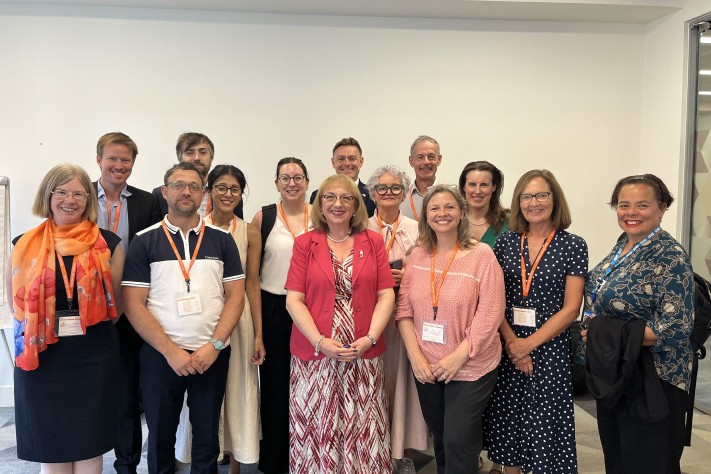
As Parliament winds up for the summer recess, Alison Morton, iHV CEO, joined leading child health experts at an important roundtable event convened by the Minister for Public Health and Prevention, Sharon Hodgson MP, to discuss longstanding concerns about child health and widening inequalities across the UK.
Held at the Department of Health and Social Care in London on 16 July, the roundtable brought together representatives from across the child health sector, including: Professor Steve Turner, President of the Royal College of Paediatrics and Child Health; Tracy Daszkiewicz, President of the UK Faculty of Public Health; Jo Casebourne, Chief Executive of Foundations What Works Centre for Children and Families; Will Quince, CEO of the 1001 Critical Days Foundation; Paul Wright, Lead Political Officer at the Alliance for Children; Liz Ketch, Director for Early Years, Children and Families at DHSC; and Michelle Bateman, Deputy Chief Nursing Officer, among others.
The timely event followed publication of the State of Child Health 2026 report earlier this month, which presented stark findings on the deteriorating state of child health. Across nearly all major measures, outcomes have worsened or stagnated across the UK, reversing years of progress and placing our children firmly at the bottom of league tables for comparable nations – with the impact felt most acutely in deprived communities and among children from ethnic minority backgrounds.
Discussions focused on understanding the child health landscape and identifying where action could have the greatest impact during the critical early years. Alison Morton outlined the urgent need to rebalance investment towards prevention and early intervention. Evidence collated by Pro Bono Economics in Rebalancing the system, published in June 2026, suggests that 82% of spending on children is now absorbed by the costs of late intervention, crippling health and local authority budgets – with insufficient resource focused on prevention and early support.
Alison highlighted growing pressures on health visiting services, with health visitors increasingly diverted into crisis management as more families require support for multiple and complex challenges. Against a backdrop of tightening budgets and growing demand, Alison argued that the government could no longer afford not to invest in prevention. With public spending increasingly consumed by the escalating costs of late intervention, incremental change would not be sufficient. A fundamental shift towards prevention and early intervention is needed to halt the decline in child health, reduce inequalities – and delivering the Healthy Child Programme in full for every child must be a core element of the proposed Modern Service Framework for Children, alongside measures to tackle the root causes of child poverty. A view that received unanimous support from roundtable participants.
Professor Steve Turner reminded officials that children may be 25% of the population, but they are 100% of the future – and called for a ‘fair share’ of health spend for children.
There was widespread support and agreement that health visitors play a vital role in the child health workforce. As a universal service, they reach all families, identify needs early, provide support directly, and connect families with wider community and specialist services. Partners were united in calling for investment in health visiting and early years prevention as a priority for improving child health outcomes and reducing inequalities.
The roundtable also explored the growing impact of digital harms on children and young people’s health and wellbeing, with participants recognising this as a significant and emerging public health challenge. Minister Hodgson reiterated the government’s commitment to strengthening protections for children online and addressing the harms associated with social media use.
Participants acknowledged the challenging fiscal environment but concluded that investment in prevention, early intervention and children’s health cannot wait for economic conditions to improve – our children cannot wait any longer! With need rising and outcomes worsening, the group called for a cross-government prevention fund, recognising that investment in our nation’s children delivers benefits across health, education, social care, welfare, crime prevention and future economic productivity. They argued that departments across government that benefit from reduced demand and improved long-term outcomes should contribute to a shared prevention fund, and stressed that sustained, ambitious investment, rather than incremental change, is needed now to reverse years of cuts to preventative services and tackle widening inequalities.
Alison Morton, iHV CEO, reflected on the event:
“It was a privilege to speak up for babies, children and families, and the health visiting services that support them, at this important event. Against a backdrop of deteriorating child health and widening inequalities, there was a clear consensus around the table that children must be a top priority for this government – with a new Prime Minister and a significant cabinet reshuffle due this week, this cannot be postponed or delayed any longer.
“I was particularly encouraged by the strong and unanimous support expressed for health visiting and the vital role that health visitors play in improving outcomes for children and families. The message from partners was clear: if we are serious about giving every child the best start in life, reducing inequalities and improving the nation’s health, we must invest in prevention and early intervention. Health visiting is a proven, cost-effective service that reaches every family, and it must be part of the solution.
Above all, there was agreement that children must be at the heart of government decision-making, now and in the future.”
The iHV would like to thank Sharon Hodgson MP for convening this important discussion and for her commitment to improving children’s health during her time as Minister for Public Health and Prevention, including action to strengthen online safety for children and the recent announcement of a ban on the sale of high-caffeine energy drinks to under-16s. As Parliament heads into recess and speculation grows about the outcome of the ministerial reshuffle, partners were united in their view that children must remain a top government priority, with a continued focus on prevention, early intervention and giving every child the best start in life.